

7 Bizarre And Truly Scary Plants You Never Knew Existed

Nature’s darker side reveals itself through bizarre and frightening plant species that captivate with their peculiarities. From strangling tares to humongous fungi, these plants defy conventional expectations, evoking a sense of awe and fear. This article will unravel the mysteries behind the scary plants, each possessing unique traits that challenge our perception of the plant kingdom. Brace yourself for a journey to the top bizarre and scary plants you never knew existed. Are these plants really scary?
What Makes a Plant Truly Scary?
Plants classified as “scary” often possess unique features that evoke fear or caution. Toxicity is a key factor, with some plants containing harmful compounds that can cause harm upon contact or ingestion. Unusual appearances, such as dark colors, spiky structures, or eerie shapes, contribute to their classification. Behavior, like rapid movement or emitting frightening odors, also adds to the perception of scariness. These criteria may stem from a combination of folklore, cultural beliefs, and scientific considerations, creating a diverse range of plants labeled as “scary.”
7 Bizarre and Truly Scary Plants
Welwitschia Mirabilis

Welwitschia mirabilis is a unique and ancient plant species native to the Namib Desert in southwestern Africa, specifically Angola and Namibia. Its distinctive features include a woody trunk that grows horizontally along the ground, producing only two long, strap-like leaves throughout its lifetime.
Though Welwitschia mirabilis might look eerie, it is not inherently classified as a scary plant. However, due to its peculiar appearance and the harsh environment it thrives in, it has been included in various lists of unusual or bizarre plants. These lists often highlight its ability to survive extreme arid conditions and its longevity, with some individuals estimated to be over 2,000 years old.
Culturally, Welwitschia mirabilis holds significant value for the indigenous peoples of the region. It is considered a symbol of resilience and adaptability in the face of adversity. The plant has also been featured in artwork, literature, and documentaries, further emphasizing its cultural significance and captivating allure.
Victoria Amazonica

Image by Elsemargriet from Pixabay
Victoria amazonica, commonly known as the Amazon water lily or Victoria water lily, is a remarkable plant found in the lush Amazon River basin. It stands out for its exceptional size and captivating characteristics, making it a truly fascinating botanical wonder.
First and foremost, the size of the Victoria amazonica leaves is what astonishes many. These giant lily pads can grow to be up to 10 feet (3 meters) in diameter, making them the largest water lily leaves in the world. These enormous pads float on the water’s surface, creating an eye-catching spectacle that is hard to ignore.
Aside from its impressive size, the Victoria amazonica possesses several captivating features. Its circular leaves have upturned edges that help them hold a large amount of weight, including small animals and even humans. This ability to support weight adds to the plant’s allure, attracting both researchers and nature enthusiasts alike.
While the Victoria amazonica itself may not be inherently scary, certain aspects of its nature and habitat contribute to its reputation as a plant with an eerie aura. One such factor is its nocturnal blooming pattern. The flower of the Victoria amazonica opens at dusk and releases a sweet fragrance, which attracts pollinators such as beetles and moths. This nocturnal blooming habit, coupled with the gargantuan size of the plant and the dark waters of the Amazon basin, can create an atmosphere that some find unsettling or spooky.
The undersides of the leaves of the Victoria amazonica are covered in sharp spines and thorns, serving as a deterrent to herbivores or would-be predators. This attribute, although a defensive adaptation, can contribute to the perception of the plant as somewhat intimidating.
Hydnora Africana
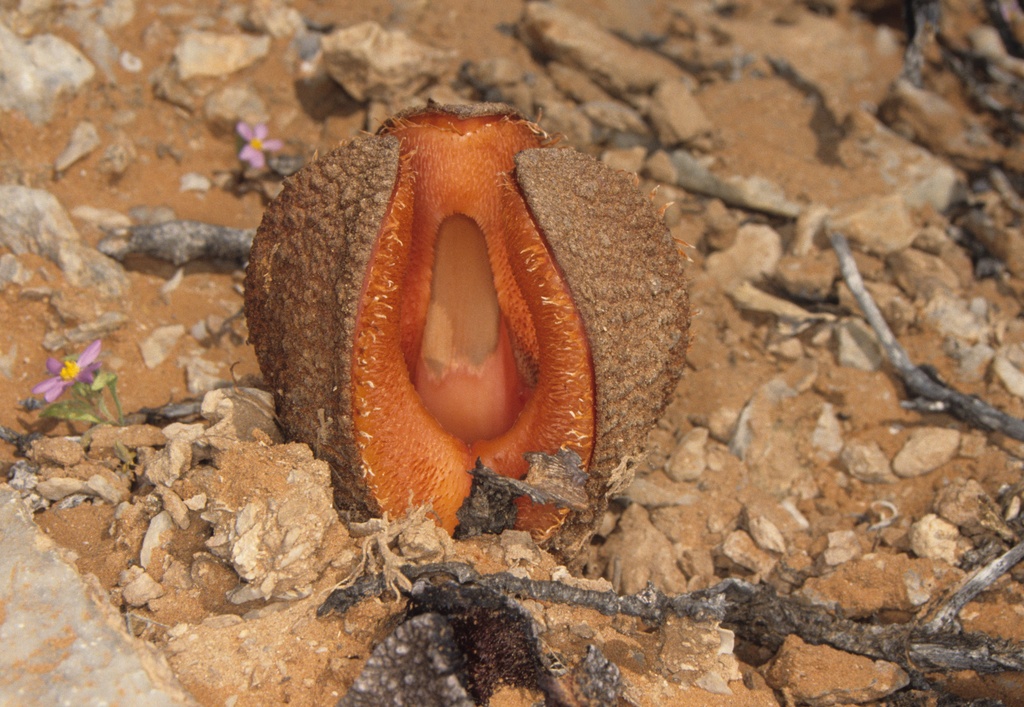
Hydnora africana is a fascinating parasitic plant native to Southern Africa. Its origin and discovery add to its mystique and allure.
The plant was first described by Swedish botanist Carl Peter Thunberg in 1789 during his travels in South Africa. Thunberg encountered this unusual species during his exploration of the Cape of Good Hope region, where he was astounded by its striking appearance and peculiar lifestyle.
Hydnora africana has a highly unique and somewhat bizarre appearance. It consists of a fleshy, underground stem that lies hidden beneath the soil, with only the flower emerging above the ground. The flower itself is large, fleshy, and bulbous, resembling a leathery, brownish-pink or purplish-brown egg. It has a pungent odor that attracts its main pollinator, dung beetles.
When a dung beetle visits the flower, it inadvertently assists in pollination by unknowingly transporting pollen from male to female flowers. This clever adaptation allows the plant to reproduce successfully within its specialized ecosystem.
While the peculiar appearance of Hydnora africana is interesting in itself, it also holds significant ecological importance. As a parasitic plant, it forms a unique relationship with its host plant, often the Euphorbia species. It attaches itself to the roots of the host, deriving nutrients and water from it. This can have both positive and negative effects on the local ecosystem.
On one hand, Hydnora africana helps control the growth of certain invasive plant species by parasitizing them. This can contribute to maintaining biodiversity and preventing the dominance of certain plants. On the other hand, the parasite can weaken its host, potentially leading to the decline or death of the host plant.
The plant’s presence also supports specific insect populations, particularly dung beetles who rely on its flowers for sustenance. The beetles feed on the plant’s sticky, pollen-rich flower tissue, and in the process, aid in the important pollination process.
Hydnora africana is an intriguing African plant with a fascinating origin and discovery story. Its peculiar appearance, reliance on dung beetles for pollination, and impact on local ecosystems make it a captivating species that underscores the complexity and diversity of the natural world.
Nepenthes

Image by Sonja Kalee from Pixabay
Nepenthes, commonly known as tropical pitcher plants or monkey cups, are carnivorous plants renowned for their unique trapping mechanisms and ability to capture and digest prey.
These plants have specialized pitcher-shaped leaves that serve as their traps. The pitchers are often filled with a liquid, typically a combination of rainwater and digestive enzymes. When prey, such as insects or small animals, are attracted to the pitcher, they slip on the waxy inner surface and fall into the liquid-filled chamber.
Nepenthes employ different trapping mechanisms to catch their prey. One common method is the passive pitcher, where the prey is lured into the pitcher by visual cues and enticing scents emitted by the plant. Once inside, the prey becomes trapped and eventually drowns in the digestive fluid.
Some Nepenthes species possess an active trapping mechanism. These plants have a lid-like structure called the peristome that sits above the pitcher opening. The peristome secretes nectar, which attracts prey. As the animal moves towards the nectar, it slips on the slippery surface and falls into the pitcher, where it meets its fate.
The diet of Nepenthes primarily consists of insects, although some larger species have been known to capture small vertebrates like frogs or mice. The digestive enzymes in the pitcher’s fluid help break down the captured prey, allowing the plant to absorb the nutrients it needs for survival.
Throughout history, Nepenthes plants have captured the imagination and sparked myths and cultural associations. In some cultures, they have been associated with enchantment, witchcraft, and even the notion of man-eating plants. However, these associations are purely fictional and derived from creative interpretations.
Nepenthes plants play an important ecological role. They often grow in nutrient-poor habitats, such as bogs or peatlands, where their carnivorous nature enables them to supplement their nutrient intake. Their ability to trap and digest insects allows them to obtain vital nutrients like nitrogen, which may be scarce in their environment.
Nepenthes are intriguing carnivorous plants with remarkable trapping mechanisms and a diverse prey range. While they have sparked myths and cultural associations, their carnivorous nature serves a crucial ecological purpose, demonstrating the wonders of nature’s adaptations.
Dracunculus Vulgaris

Image by Wilfried Santer from Pixabay
Dracunculus vulgaris, commonly known as the dragon arum or the voodoo lily, is a fascinating plant that captivates with its intriguing aspects.
One distinctive feature of Dracunculus vulgaris is its unmistakable smell. When in bloom, the flower emits a pungent odor often described as a mix of rotting meat and garbage. This strong, foul scent serves as an attractant for pollinators, particularly carrion beetles and flies. The plant’s ability to mimic the smell of decaying matter is a clever adaptation to ensure successful pollination.
In addition to its odor, the appearance of Dracunculus vulgaris is equally remarkable. The plant boasts a tall, erect stem with a single large leaf. The leaf resembles a palm tree, consisting of several leaflets radiating outward from a central stalk. The inflorescence of the plant is the most captivating feature—shaped like a dark burgundy or purple hood with a long protrusion, resembling a sinister tongue. This unique appearance adds to its intrigue and often leads to comparisons with mythical creatures or dark enchantments.
Dracunculus vulgaris has found its place in various cultures and folklore throughout its range. In Greek mythology, the plant is associated with the story of Hercules. Legend has it that Hercules encountered a monster named Ladon in his tenth labor. During the battle, Hercules killed Ladon and drops of its blood fell to the ground, transforming into Dracunculus vulgaris. This mythological connection gives the plant a sense of mystique and ancient symbolism.
In some cultures, the plant is believed to possess mystical or magical properties. It has been associated with rituals, spells, and potions in folk medicine and traditional practices. The unconventional appearance and unusual smell of Dracunculus vulgaris likely contribute to these mystical associations.
While the plant may carry cultural significance and folklore, it is important to note that Dracunculus vulgaris is primarily appreciated for its aesthetic appeal and botanical interest. Many gardeners cultivate it for its unique and exotic characteristics, finding delight in its otherworldly beauty and its ability to attract pollinators.
Dracunculus vulgaris is an intriguing plant known for its distinctive smell, striking appearance, and cultural associations. Its pungent odor and captivating features have made it a subject of fascination in folklore and serve as an attraction for both humans and pollinators.
Rafflesia Arnoldii

Mhmd.fahrezzy, CC BY-SA 4.0, via Wikimedia Commons
Rafflesia arnoldii is indeed a remarkable and fascinating plant, renowned for being the largest flower in the world. Native to the rainforests of Sumatra and Borneo in Indonesia, this extraordinary plant belongs to the genus Rafflesia, named after Sir Thomas Stamford Raffles, who was a British colonialist and the founder of the London Zoo.
The most distinctive feature of Rafflesia arnoldii is its enormous size. The flower can reach a diameter of up to 3 feet (approximately 1 meter) and weigh as much as 24 pounds (11 kilograms). Its appearance is characterized by a large, fleshy, and reddish-brown flower with five broad, leathery petals. The center of the flower is a deep, dark cavity that emits a strong and foul odor, often likened to the smell of rotting flesh.
Rafflesia arnoldii is a parasitic plant, relying on a host vine of the Tetrastigma genus for its nutrients. The plant lacks leaves, stems, and roots and is almost entirely dependent on its host for sustenance. The flower emerges directly from the host vine and takes several months to develop, with the bud growing to its full size before blooming. The parasitic nature of Rafflesia makes it a challenging plant to study and cultivate outside of its natural habitat.
One of the factors contributing to the allure of Rafflesia arnoldii is its rarity. The plant has a limited distribution in the dense rainforests of Southeast Asia, and even within its known habitats, sightings are infrequent. The elusive nature of the plant, coupled with the difficulty in cultivation, adds to its mystique and makes encountering a blooming Rafflesia a rare and special occurrence.
Rafflesia arnoldii is often considered both scary and fascinating for several reasons. The first is its appearance – the flower’s large size and unusual structure, combined with its odor, which is often likened to the stench of rotting flesh, contribute to an otherworldly and somewhat unsettling presence. The plant’s parasitic nature is also intriguing, as it represents a unique and specialized strategy for survival in the challenging rainforest environment.
The rarity of Rafflesia adds to its mystique, making it a symbol of the fragility of certain ecosystems and the impact of habitat destruction. The combination of its large size, parasitic lifestyle, rare occurrences, and distinctive appearance contributes to the fascination and, for some, the eeriness of Rafflesia arnoldii.
Amorphophallus Titanum (Corpse Flower)

The Amorphophallus titanum, commonly known as the Corpse Flower, is a remarkable and infamous plant that has earned its reputation for several distinctive features. Native to the rainforests of Sumatra in Indonesia, this plant belongs to the Araceae family and is renowned for its colossal size and its unique blooming process.
The Corpse Flower holds the title for the world’s largest unbranched inflorescence, with its size often reaching up to 10 feet (3 meters) in height. The central “spadix” of the flower, which resembles a large, fleshy spike, can grow even taller. The surrounding petal-like structure, known as the “spathe,” opens up to reveal a deep maroon color, adding to the visual spectacle of the plant. The sheer size of the Corpse Flower is one of the key factors that contribute to its notoriety.
What sets the Corpse Flower apart is its infrequent and unpredictable blooming process. The plant can go for several years without flowering, and when it finally does, the bloom typically lasts for only 24 to 48 hours. The blooming process is a fascinating and rare event, drawing attention from botanists, horticulturists, and curious onlookers alike.
During its bloom, the Corpse Flower emits a strong odor reminiscent of rotting flesh, earning it the name “Corpse Flower.” This pungent smell is meant to attract pollinators, such as carrion beetles and flies, which are naturally drawn to the scent of decaying matter. The combination of its massive size and the putrid odor during flowering makes the Corpse Flower a unique and unforgettable botanical experience.
The Corpse Flower’s intimidating reputation is largely due to the combination of its size, rarity, and the foul smell it emits during blooming. The strong odor, which can be detected from a considerable distance, is designed to mimic the smell of a decaying animal to attract pollinators. This adaptation, while fascinating from a biological perspective, contributes to the plant’s eerie reputation.
The infrequent blooming and short duration of the flower’s bloom add an element of mystery and anticipation, drawing crowds eager to witness the rare event. The Corpse Flower has become a botanical celebrity, often featured in botanical gardens around the world when in bloom, attracting both enthusiasts and the curious who want to experience its unique and intimidating presence firsthand.
Conclusion
Remember that even though some plants may seem scary or dangerous, they play crucial roles in ecosystems and can be fascinating subjects for study. Always exercise caution and avoid contact with unknown plants, especially in the wild, as some may be harmful or toxic.


