

How to Grow and Care for Lithops in the Philippines

This time it is all about the care of lithops. Excuse me as this post is a bit off-topic. But it is still about plants and besides, we are all fans of nature’s beauty so here is a bit of sharing my experiences in taking care of lithops aka living stones in our tropical country – the Philippines. In this article, I’d like to share my experience on how to grow and care for lithops in the Philippines.
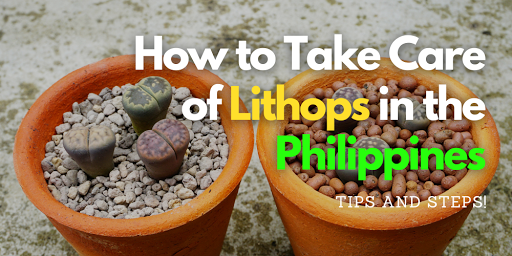
How to Grow and Care for Lithops in the Philippines
I am afraid to say that many lithops collectors in the tropics such as the Philippines have in one way or another failed with lithops. I am one of them. I don’t know what’s with this plant that even though it is hard and slow to grow, I still can’t resist acquiring it and trying again and again.
So here I am again trying my luck on lithops. And my setup is, well, Philippine set up. Our climate is tropical which is way different from where lithops naturally thrive. It is obvious that I have to do something extra to make sure that if I want them to thrive, I have to give my lithops an environment that is somehow close to the region where they naturally grow.
So the big question is “How do we take care of lithops in tropical countries like the Philippines?”
The short answer is you just have to make sure that you don’t give them too much water.
They kind of have a love-hate relationship with water. Don’t get me wrong. Lithops do need water. But if they spend too much time in the water, they simply die.
And when they die, you want to really find out the long answer as to why they should not be given too much to drink.
So here are some things you want to consider if you are planning to grow some lithops in the Philippines…
1. Air Circulation
Very very important. When you water, you want to make sure that the water will not only drain off the pot. The soil mix you are using, whatever mix it is, will retain some water/moisture whether you like it or not. So to help speed up the drying process… you need airflow. The source of air could be air conditioning, an electric fan, or natural air which is not always available, so you might end up with the first 2. When the airflow is sufficient, you are helping your lithops experience their natural arid habitat again. And they are gonna love it.
2. Soil mix
A well-draining soil mix is another crucial factor in keeping your lithops babies happy. We know that lithops don’t really want to stay long with water on their feet and a well-draining mix will help them get rid of the water fast. Sample well-draining soil mix is:
10% organic (coco peat, vermicast, rice hull)
90% pumice
3. Pot
No matter how amazing your soil mix is, if your pot is not good at absorbing moisture or water, you might just be wasting time and putting other lithops in great danger. So what pot should we use?
Porosity – use porous pots like clay pots. Not the glazed ones as they are just like the plastic pots that won’t help in absorbing moisture.
Height – tall pots at better at draining water than flat or bowl-type pots. Here is a little experiment: Try to get a dishwashing sponge and get it to absorb some water. Notice that when it is vertical, the water drains faster and it stays when horizontal. That should explain my point.
Size – do not overpot lithops. And that has something to do with drainage again. The more soil in use, the longer it takes to drain. More soil also means more moisture and humidity will be trapped inside. That is bad for lithops.
4. Watering
Many plantitos and plantitas love lithops because they don’t demand a lot of attention when it comes to watering. But sometimes we get so excited and we water them as we please. Unfortunately, the more you think you are just showing them some love by giving them a lot of water, the more you are basically killing your babies. So the best time to water them is when they are starting to show some wrinkles. The wrinkles around their neck are completely normal and it is their silent way of telling you that they are thirsty. When you see those signs, it is the safest time to water them. And when you water them make sure that it drains. You will be surprised at how they plump up again in just a few days.
Conclusion
So there you have it.
There are many styles of caring and growing for lithops in the tropics out there depending on what works for the collectors but here are the things that worked for me so far.
There are more tips coming up. Stay tuned to part 2 of this blog where we will be discussing what to do when they flower and when they shed leaves. 😉
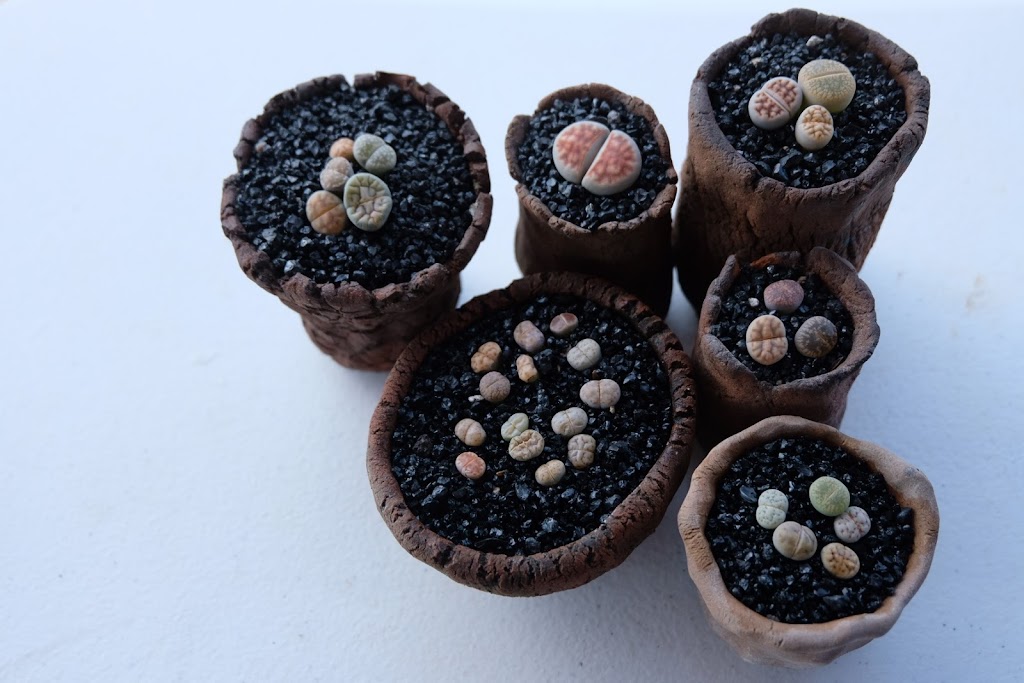
Meanwhile here are some pictures of the lithops in my collection.


Get posts like these from Oh!Pots. They create pots that will make you and your plants happy and make your care of lithops a success next time 🙂


